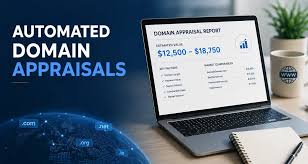
Automated domain valuation tools are online calculators. They try to guess the price of a website address. These tools look at many different factors.
They use algorithms to crunch numbers. The goal is to give you a quick estimate of your domain’s market value. This can be helpful when you’re just starting out.
It’s also useful for a quick check on multiple domains.
Think of it like getting a ballpark figure for a house. The tool gives you a number. This number is based on data it can see.
It’s not a perfect science. But it can point you in the right direction. It helps you understand if your domain is seen as valuable or not.
Many factors go into this number. We’ll look at them soon.
How These Tools Work: The Data Behind the Numbers
These valuation tools look at several key pieces of information. They gather this data from public sources. Then, they compare it to sales of similar domains.
This helps them make an educated guess. Let’s break down the main things they examine.
Domain Age and History
One big factor is how old your domain is. Older domains often have more trust. They might have a longer history.
This can make them more appealing. Tools look at when the domain was first registered. They also check if it has been renewed consistently.
A domain that’s been around for a long time with no breaks is usually seen as better. It shows stability.
They also look at its past. Was the domain used for something bad? Did it have spammy content?
A clean history is important. Tools might check for past blacklisting. They want to know if the domain has a good or bad reputation.
A domain with a good past is worth more.
Keyword Relevance and Search Volume
The words in your domain name matter. Tools check if these words are good keywords. Are people searching for them?
High search volume keywords in a domain can be valuable. For example, “carsforsale.com” is likely more valuable than “mywebsite123.info”. The words themselves tell a story.
They suggest what the website is about.
They also consider the user intent behind those keywords. Are people looking to buy? Are they just browsing?
The more commercial the keywords, the higher the potential value. This is a key part of what makes a domain name sellable. It’s about understanding the market for those words.
Domain Authority and Backlinks
Domain authority is a score. It shows how likely a website is to rank well in search engines. Tools look at this score.
They also check the number and quality of backlinks. Backlinks are links from other websites to yours. High-quality backlinks are like votes of confidence.
They tell search engines that your site is trustworthy.
A domain with high authority and many good backlinks is often more valuable. This is because it already has an audience. It has established credibility.
It takes a lot of work to build this. So, a domain with this already in place can fetch a higher price. It saves the new owner time and effort.
Traffic and Engagement Metrics
Some tools try to estimate traffic. They look at how many visitors a website gets. They also look at how engaged those visitors are.
Do they stay long? Do they click around? High traffic and good engagement are signs of a healthy website.
This makes the domain more attractive.
However, many automated tools can’t see your actual traffic data. They have to guess. They might look at public data about similar websites.
Or they might use SEO tools to estimate potential traffic. This is one area where automated tools can be less accurate. They don’t have your private analytics.
Brandability and Memorability
Can the domain name be a brand? Is it easy to remember and spell? Tools try to assess this.
Short, catchy, and unique domain names are often more valuable. They are easier for people to recall. They also sound more professional.
A name that sounds like a strong brand can command a higher price.
This is a bit harder for a machine to judge. It’s more subjective. But tools might look at things like the number of syllables.
They might check for awkward spelling. They might compare it to successful brands. The overall feeling of the name is considered.
Extension (.com, .org, .net)
The domain extension is very important. The .com extension is by far the most popular. It’s seen as the gold standard.
Domains with a .com extension are generally worth more. Other extensions like .org and .net are also valuable. But they usually sell for less than comparable .com domains.
Newer extensions like .io, .ai, or .tech are growing. Their value depends on the industry. A .ai domain might be very valuable for an AI company.
But it might be worth less for a local bakery. The tool will consider the popularity and perceived value of the extension. This influences the final valuation.
Quick Scan: Domain Value Factors
Domain Age: Older domains often have more trust.
Keywords: Relevant, high-search volume words add value.
Authority: High scores mean more trust and ranking power.
Backlinks: Good links from other sites boost value.
Brandability: Easy to remember, unique names are better.
Extension: .com is usually worth the most.
My Own Experience: The Day I Priced My First Domain
I remember when I first built my little blog about gardening. It was a passion project. I picked a name I loved: “GreenThumbTips.net”.
I worked hard on it for a year. I wrote articles, added photos, and tried to make it helpful. One day, I got an email from someone asking to buy it.
I had no idea what it was worth. My heart jumped!
I went to one of those online valuation tools. I typed in “GreenThumbTips.net”. The number it spat out was surprisingly low.
It was way less than I had hoped. I felt a bit deflated. I thought, “Is all my work worth so little?” Then I realized something.
The tool didn’t know about my loyal readers. It didn’t know how much effort I put in. It didn’t know that I had connected with other gardening bloggers.
It just saw the .net and the words. It was a good start, but it wasn’t the whole story.
The Upside: Why Use Automated Valuation Tools?
Even with their limits, these tools are useful. They offer several benefits. They are fast and convenient.
They can give you a quick starting point. This is important when you have many domains or are new to this.
Speed and Convenience
You can get a valuation in seconds. Just type in your domain name. Click a button.
And there’s your number. This is super fast compared to hiring an expert. It’s perfect for a quick check.
You don’t need to spend hours researching.
If you own several domains, you can check them all quickly. This helps you decide which ones might be worth more attention. Or which ones to let go of.
The ease of use is a big plus for busy people.
Initial Price Guidance
The estimate provides a starting point. It helps set your expectations. If the tool says your domain is worth $100, you won’t ask for $10,000.
This prevents unrealistic pricing. It can save you time by not entertaining offers that are too low.
It also gives you an idea of what buyers might expect. They might use similar tools. So, knowing this number helps you negotiate.
It’s a reference point in any discussion about price.
Identifying Potential Value
Sometimes, a tool might highlight a value you didn’t expect. Maybe your domain has good keywords. Or maybe it’s a brandable name.
The tool’s analysis can open your eyes. It can show you potential hidden value. This can encourage you to invest more in that domain.
You might discover that a simple domain you registered years ago is now quite valuable. This is because the market for certain keywords has grown. The tool can be the first signal that something is worth a closer look.
It’s like a helpful nudge.
Comparison with Market Trends
These tools analyze many domain sales. They use this data to understand current market trends. They know what similar domains have sold for recently.
This gives you insight into the broader domain market. You can see what kinds of names are popular now.
This information is valuable for domain investors. It helps them make smart buying and selling decisions. They can spot good opportunities.
They can avoid overpaying for domains that are not in demand. It’s like getting a mini market report.
Domain Value: Quick Wins
Fast Estimates: Get a price idea in seconds.
Setting Expectations: Helps you price realistically.
Hidden Gems: Can uncover unexpected value.
Market Insight: Shows current domain trends.
The Limitations: Where Automated Tools Fall Short
While helpful, these tools are not perfect. They have significant limitations. Relying on them alone can be misleading.
They can’t capture everything that makes a domain valuable.
Lack of Human Insight
A machine can’t understand creativity. It doesn’t know your passion. It can’t feel the potential of a brand.
Human buyers often look for unique qualities. They see the vision behind a name. Automated tools miss this entirely.
They focus only on measurable data.
For example, a name might be a bit abstract. It might not have obvious keywords. But a creative entrepreneur could see it as the perfect name for a new tech startup.
A tool would likely undervalue this. It can’t judge future potential or abstract ideas.
Inability to Assess Specific Niches
Some niches are very specialized. The value of a domain in these niches depends on expert knowledge. A tool might not understand the nuances.
It might not know the demand for certain industry terms. Or it might not recognize a brandable name within that niche.
For instance, a domain related to a very specific scientific field might be worth a lot to researchers. But an automated tool might see only generic words. It wouldn’t grasp the specialized demand.
This is where human appraisal becomes crucial. Experts in that field can see the true value.
Ignoring Unique Selling Propositions
What makes your website special? Is it your unique content? Your loyal community?
Your strong social media presence? These things add immense value. But automated tools can’t measure them.
They can’t see your community or your content quality.
A domain might be simple. But if the website it’s attached to is a huge success, the domain’s value increases significantly. The brand is built around the name.
The tool only sees the name, not the success story behind it. This is a major blind spot.
Inaccurate Traffic and Revenue Estimates
As mentioned, tools often guess traffic. They don’t have access to your private analytics. They also can’t know your website’s revenue.
A domain might get low traffic but generate high revenue. Or vice versa. The actual money a domain can make is a big part of its value.
Without real traffic and revenue data, the valuation can be way off. A tool might say a domain is worth $500. But if that domain powers a site making $50,000 a year, it’s worth much, much more.
This is a critical piece of information missing from automated reports.
Limited Understanding of Market Demand
The domain market is dynamic. Demand changes. What’s popular today might not be tomorrow.
Tools rely on past sales data. They might not always catch the latest trends. They can lag behind current market sentiment.
This can lead to outdated valuations.
For example, if a new technology emerges, domains related to it might suddenly become very valuable. A tool that hasn’t updated its data might miss this surge. It won’t reflect the immediate, new demand.
It might take time for the algorithms to catch up.
When Tools Don’t Measure Up
No Feel for Brand: Misses creativity and vision.
Niche Blindness: Doesn’t grasp specialized market worth.
Unique Factors Missed: Ignores content, community, and reputation.
Guesswork on Traffic/Revenue: Lacks real business data.
Slow to Adapt: Can lag behind fast-changing trends.
Real-World Scenarios: When a Domain’s Value is More Than the Name
Imagine Sarah, who bought “BestCupcakesEver.com” years ago. She poured her heart into her bakery. Her website became the go-to place for custom cakes in her city.
She had a huge local following. People loved her designs. She often got orders through her website’s contact form.
Her website had a great local SEO score too.
An automated tool might give “BestCupcakesEver.com” a moderate value. It sees the words “best,” “cupcakes,” and “.com”. It might also see some backlinks.
But it doesn’t see the loyal customer base. It doesn’t know that her bakery is booked months in advance because of her online reputation. It doesn’t see the thousands of happy customers who refer friends because they found her online.
The domain’s value is tied to the thriving business it represents.
Now, consider Mark. He registered “InnovateNow.io” last year. He’s building a cutting-edge AI platform.
His website showcases his software demos and attracts tech investors. “InnovateNow.io” is catchy and modern. The “.io” extension is popular in tech.
An automated tool might give it a good value based on keywords and brandability.
However, Mark has also secured major funding. His platform is about to launch. The domain “InnovateNow.io” is now linked to a company with millions in backing and a buzz in the tech world.
This makes the domain extremely valuable. It’s not just a name anymore; it’s the gateway to a high-potential business. The automated tool can’t predict future success or investment rounds.
Interpreting the Results: What to Do With the Valuation Number
So, you’ve used a tool and got a number. What does it mean? Don’t treat it as gospel.
See it as a starting point for your own research.
When the Valuation Seems Fair
If the tool gives a number that feels right, it’s a good sign. Maybe you checked a domain like “UsedCarsOnline.net”. An automated tool might value it at a few hundred dollars.
This makes sense. It’s a descriptive name, but not super premium. It has a .net, which is less valuable than .com.
In this case, the tool’s number is probably close to what you could get. It tells you that the market sees this domain as moderately valuable. You can use this to set your asking price.
Or to decide if an offer is reasonable. It’s a solid data point.
When the Valuation is Too Low
If the tool says your domain is worth $50, but you know it’s popular, it’s time to dig deeper. Maybe your domain has a clean, established history. Perhaps it gets a lot of direct type-in traffic.
Or it’s a perfect brandable name for a growing industry.
This is where you need to do more research. Look at comparable sales of similar domains. Check your website’s traffic and revenue.
Talk to domain experts. Your domain might be worth much more than the tool suggests. The low valuation is a signal to investigate further, not to give up.
When the Valuation is Too High
Sometimes, a tool might give a very high number. This can happen if the domain has rare keywords or a very strong extension, like a short .com. If the number seems too good to be true, it might be.
The tool might be overestimating due to a specific algorithm quirk or data point.
While exciting, be cautious. Don’t inflate your asking price unrealistically. Try to find other examples of similar sales to confirm the high valuation.
If you can’t find evidence, the tool’s number might be an outlier. It’s better to have a realistic price that attracts buyers.
Factors Not Captured by Tools
Remember the limitations. Your domain’s actual value is often tied to factors the tool can’t see. This includes:
- The quality and engagement of your website’s content.
- Your website’s brand reputation and customer loyalty.
- The profit your website generates.
- Unique market demand that the tool hasn’t recognized.
- Future potential and growth prospects.
These are the things that a human appraiser will look at. They are also what a motivated buyer will assess. They can add significant value beyond the automated estimate.
What to Do With the Number
Fair Value: Use as a good starting price.
Too Low: Investigate more. Your domain may be undervalued.
Too High: Be cautious. Seek confirmation before setting a high price.
Consider Intangibles: Remember things tools can’t measure.
When to Seek Professional Appraisal
For critical decisions, like selling a high-value domain or making a large investment, an automated tool is not enough. You need professional help. A domain appraiser has the experience and knowledge to give a true valuation.
High-Value Domains
If a tool suggests your domain is worth thousands or tens of thousands of dollars, it’s time for an expert. Professional appraisers can look at all the factors. They understand market trends, buyer psychology, and the nuances of the domain market.
They can justify their price with solid reasoning.
These professionals have access to databases of private sales. They also have networks of buyers and sellers. This gives them a deeper understanding of current market demand.
Their appraisal is more reliable for significant assets.
Selling Your Website
If you are selling your entire website, not just the domain name, its value is complex. The domain is part of the asset. But the website’s content, traffic, revenue, and brand are often worth much more than the domain alone.
A professional website broker or appraiser can value the whole package.
They will consider the domain’s contribution to the website’s success. They will also factor in the website’s overall performance. This ensures you get a fair price for your hard work.
Automated tools can’t do this kind of holistic assessment.
Acquiring a Domain for Business
When buying a domain for your business, you want to be sure you’re not overpaying. A professional appraisal can give you confidence. It confirms that the price is fair based on the domain’s actual market value and potential.
This protects your investment.
A good appraiser can also identify risks. They might spot issues with the domain history. Or they might advise on the domain’s suitability for your specific business goals.
This expert guidance is invaluable for important business decisions.
How to Get the Most From Automated Tools
Even with their limits, you can use these tools wisely. Here are some tips to get the best results.
Use Multiple Tools
Don’t rely on just one tool. Different tools use different algorithms and data sets. Compare the results from several of them.
This gives you a range of values. It helps you see if most tools agree. Or if one is an outlier.
Some popular tools include GoDaddy Appraisal, EstiBot, and Sedo. Each one might give a slightly different number. By looking at several, you get a more balanced view.
It’s like getting opinions from a few friends.
Understand the Metrics They Use
Spend a little time learning what each tool considers. Does it focus on keywords? Age?
Backlinks? Knowing this helps you understand why it gave a certain number. It also helps you see what data might be missing.
For example, if a tool heavily weighs keywords but your domain is more brandable, you know its valuation might be low. If another tool focuses on brandability and gives a higher number, that might be more relevant to your domain.
Check Comparable Sales
Look for recent sales of domains similar to yours. Websites like NameBio track domain sales. Compare your domain to those that have sold.
Were they .com or .net? Did they have similar keywords? Were they short or long?
This real-world data is very powerful.
Seeing what people actually paid for domains gives you the best market insight. It’s more reliable than an automated guess. It shows you what buyers are willing to spend.
Consider Your Domain’s Unique Strengths
Think about what makes your domain special. Does it have a great story? Is it perfect for a booming industry?
Does it have a strong, active community behind it? These are things the tools won’t know. But they add real value.
If you’re selling, be ready to explain these unique strengths. Have data to back them up. This human element is what can push a sale price higher than any automated tool could predict.
Smart Tool Use
Try Several Tools: Get a range of estimates.
Know Their Data: Understand what drives the valuation.
Compare Real Sales: Use sites like NameBio for data.
Highlight Your Domain’s Story: Add value beyond the name itself.
Common Domain Valuation Myths
There are many misconceptions about domain value. Let’s clear up a few.
Myth: All .com domains are worth a lot.
While .com is generally the most valuable, not all .com domains are expensive. A long, unmemorable, or poorly chosen .com might be worth very little. Value depends on the specific words, brandability, and market demand, not just the extension.
Myth: Domain length is the only factor.
Short domains are often valuable, but not always. A short, generic, or hard-to-spell short domain might be less valuable than a longer, highly descriptive, or perfectly brandable domain. Clarity and relevance often matter more than just brevity.
Myth: If a tool says it’s worth X, it is worth X.
As we’ve discussed, automated tools provide estimates. They are not definitive appraisals. The true market value is what a willing buyer will pay.
This can be higher or lower than an automated tool’s guess.
Myth: Age equals high value.
An old domain with a poor or spammy history is not valuable. In fact, it might be a liability. A clean, established history is what matters for age.
Many old domains are simply unused and have no inherent value.
Myth: My domain is valuable because I like it.
Personal attachment is wonderful, but it doesn’t translate to market value. Value is determined by what others are willing to pay. It’s about market demand, keyword relevance, and brand potential, not personal preference.
Conclusion: The Art and Science of Domain Valuation
Automated domain valuation tools are a great first step. They offer speed and basic insights. They can help you understand general market perceptions.
However, they are not the final word. True domain value is a mix of data and human judgment. Consider the tools as helpful guides.
But always do your own research. Understand your domain’s unique story. Then you can truly know its worth.
Frequently Asked Questions About Domain Valuation
What is the most important factor in domain valuation?
The most important factor is often the keywords within the domain name and their relevance to buyer intent. However, brandability, the .com extension, and sales history of similar domains also play a huge role. It’s a combination of these elements.
Can I use a domain valuation tool to price my domain for sale?
Yes, you can use them for a starting price estimate. But it’s best to use multiple tools and compare their results. Always research comparable sales.
Remember that the tool’s number is just an estimate, not a guaranteed sale price.
How accurate are automated domain valuation tools?
Their accuracy varies greatly. They can be good for generic or common domains. But they often miss the unique value of brandable domains, niche keywords, or websites with strong existing businesses.
They are best used as a quick reference, not a final appraisal.
What is a “premium” domain name?
A premium domain name is typically short, memorable, brandable, and often uses a .com extension. Examples include short dictionary words, acronyms, or easily recognizable phrases. These domains command higher prices due to strong demand and limited supply.
How does domain age affect its value?
Domain age can increase value if the domain has a clean history and has been consistently renewed. Older domains often have more established authority and trust. However, a very old domain with a bad history can be worthless or even detrimental.
When should I get a professional domain appraisal?
You should seek a professional appraisal if your domain is potentially worth several thousand dollars or more. Also, consider it when selling a business, buying a significant domain for your company, or for legal or estate purposes. They offer a much more detailed and accurate valuation.
What is a “type-in” domain?
A “type-in” domain is one that people type directly into their browser’s address bar. These domains are often short, brandable, or highly relevant to a specific product or service. They tend to receive direct traffic, which adds to their value.